
🔖𝙏𝒊𝙜𝒓𝙖𝒊 𝑾𝙚𝒆𝙠𝒍𝙮 𝘿𝒊𝙜𝒆𝙨𝒕

𝓔𝒏𝓭𝒊𝒏𝓰 February 17, 𝟐𝟎𝟐6
𝐴 𝑏𝑙𝑜𝑔 𝑤𝑜𝑣𝑒𝑛 𝑤𝑖𝑡ℎ ℎ𝑢𝑚𝑎𝑛-𝑐𝑒𝑛𝑡𝑒𝑟𝑒𝑑 𝑠𝑡𝑜𝑟𝑖𝑒𝑠, 𝑜𝑏𝑗𝑒𝑐𝑡𝑖𝑣𝑒 𝑖𝑛𝑠𝑖𝑔ℎ𝑡𝑠, 𝑎𝑛𝑑 𝑜𝑟𝑖𝑔𝑖𝑛𝑎𝑙 𝑝𝑒𝑟𝑠𝑝𝑒𝑐𝑡𝑖𝑣𝑒𝑠 —𝑧𝑜𝑜𝑚𝑖𝑛𝑔 𝑖𝑛 𝑜𝑛 𝐓𝐢𝐠𝐫𝐚𝐢 𝑤𝑖𝑡ℎ𝑖𝑛 𝑡ℎ𝑒 𝑤𝑖𝑑𝑒𝑟 𝐄𝐭𝐡𝐢𝐨𝐩𝐢𝐚𝐧 𝑐𝑎𝑛𝑣𝑎𝑠.
I have handled two topics in this edition, both of which you would find timely and reflective enough.
Enjoy reading! Feel free to send your thoughts!
1. Happy 51st Anniversary of Lekatit 11
Lekatit 11 may have dimmed because of the current state of politics, but it shall endure as a lasting legacy and symbol of collective aspiration.
Lekatit 11 remains a day etched deeply in the consciousness of almost every Tigrayan — a symbol of patriotism, resistance, and the unity of a people forged in adversity. For decades, this date was marked with vibrant celebrations across Tigray, in foreign capitals, and throughout Ethiopia, wherever Tigrayans lived in significant numbers or where sympathizers gathered to honor the struggle. It commemorates more than 55,000 combatants who lost their lives, as well as roughly twice that number of civilians who perished through collateral devastation or deliberate attacks.
There are countless epic stories tied to this day and to the rebellion against cultural suppression, political marginalization, and humanitarian crises— crises aggravated by state failures yet resisted through a powerful sense of nationalism and defiance. The struggle stretched across years of hardship and hope, marked by setbacks and triumphs, despair and elation, culminating in the dramatic capture of the Ethiopian capital in 1991.
Yet history did not unfold as many had envisioned. The leaders of the struggle — the Tigray People’s Liberation Front — once revered as the embodiment of sacrifice and resolve, ultimately delivered far less in terms of democracy, justice, and accountable governance than ordinary citizens had anticipated. Some tolerated this as an inevitable transitional phase after armed struggle. But the fracture of March 2001, when a significant portion of the leadership — many of its most formidable figures — were sidelined by Meles Zenawi and his allies, marked the beginning of a steady erosion of cohesion and legitimacy.
Following Meles’s sudden death, the remaining leadership struggled to sustain direction. The ascent of Abiy Ahmed exposed internal weaknesses even more starkly, and the devastating war in Tigray revealed a movement increasingly adrift — clinging to hollow rhetoric that no longer resonated with lived realities.
In this climate, the legacy of Lekatit 11 itself has suffered. As the TPLF’s popularity waned, the commemoration began to lose its unifying power. Celebrations persist, but often appear muted — sustained largely by loyalists or by people attending out of obligation rather than collective enthusiasm. The diaspora, once the clearest barometer of public sentiment, now gathers in noticeably smaller numbers. Even those gathered to celebrate, nostalgia seems to have replaced the electrifying spirit that once defined the day. What was once an undisputed symbol of unity now evokes mixed emotions — pride intertwined with disappointment, reverence tempered by fatigue.
Against this backdrop, the current chairperson, Debretsion Gebremichael, delivered his commemorative remarks by candlelight, honoring the martyrs — among them his own elder brother. Yet his message echoed familiar refrains. Representing a leadership whose 2024 congress was widely criticized as flawed, he stated that peace remains the preferred path but warned that any federal military move would be met with resolute defense.
Meanwhile, voices of the opposition, including figures such as Tsadkan Gebretensae and Asefa Abreha, continue to argue — implicitly or explicitly — that the existing political-military elite must step aside. Without leadership renewal, they contend, Tigray risks remaining hostage to a narrow circle of power and an unholy alliance with shaebia.
Thus, as Lekatit 11 passes this year, the atmosphere is again charged with the ominous rhetoric of conflict. Reports suggest the federal army is preparing for possible northern operations, though the precise target — whether the Eritrean state alone or a broader confrontation — remains uncertain. Much hinges on where the TPLF’s military and political leadership ultimately positions itself.
As I argued months ago, prudence demands distance from any renewed confrontation. When elephants fight, survival often lies in stepping aside. If circumstances force alignment, it should be pragmatic and oriented toward minimizing further suffering for a population already scarred by immense loss. The enduring strategic reality, in my assessment, remains the hostility of the Eritrean state under Isaias Afwerki.
Yet, regardless of present turmoil, the spirit of Lekatit 11 must not be diminished. It transcends any single organization or leadership. The ideals that animated its forerunners — sacrifice, dignity, and collective resilience — belong to the people, not to the current usurpers of power.
2. In Commemoration of Hayelom Araya: The Measure of a Life
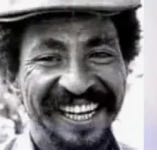
This week brings into sharp relief the commemoration of two profoundly significant moments, set almost symmetrically across time. The first is the 40th anniversary of the audacious storming of the Mekelle maximum prison on the night of February 6, 1986—an operation that has since entered the annals of the struggle as both legend and lesson. The second is the passing of the very figure who personified that legend, nearly a decade later and almost to the day, on the morning of February 14. It feels fitting, therefore, to devote one of today’s reflections to Hayelom Araya.
Who was Hayelom Araya?
Born in 1946 in the village of Adi-Nebried, west of Widak, Hayelom—christened Hadush—grew up in the stark, windswept highlands of Adiabo. From an early age, he carried the imprint of a proud and martial lineage. His father, Dejach Araya Baryagaber, along with several uncles, counted among the early patriots who resisted the Italian invasion during the Second Italo-Ethiopian War, fighting under the command of Ras Imru Haile Selassie. Many fell in battle. That inheritance of sacrifice seems to have instilled in Hayelom a durable sense of duty, courage, and moral direction that would shape his life.
As a boy, he roamed the Badme plains and surrounding areas with his nephew Birhane Meskel Ambaye (known as Gerenchiel among TPLF comrades), hunting with firearms that were not uncommon in rural households of the time. His later move to Adigrat for secondary school, where his elder brother served as guardian, exposed him to a broader social world and may have created a degree of political awareness in him.
Into the Struggle
Hayelom joined the armed struggle at nineteen, not long after university students and recruits from Shire departed Dedebit toward Widak. From the outset, he was battle-ready—armed with a machine gun, clad in fatigues, and wearing the now iconic sandals of the resistance. Though lacking formal military schooling, he absorbed discipline through field drills and quickly distinguished himself as both a sharpshooter and a tactician. Engagements at Sero against government soldiers, at Adi-Nebried against the EDU, and at Chea-Meskebet further cemented his reputation.
By the time the Ethiopian People’s Revolutionary Democratic Front entered Addis Ababa, Hayelom had emerged as one of its most respected field commanders. His blend of battlefield acumen, moral clarity, and personal humility earned admiration across the ranks of the Tigray People’s Liberation Front.
The Man Behind the Legend
Conversations with former comrades—whose names are adapted here for discretion—reveal a portrait consistent in tone if varied in detail.
Gidey Hadgu, who joined the struggle at sixteen, recalled simply:
“When Hayelom led, you believed victory was inevitable.”
To him, Hayelom’s presence alone fostered discipline and confidence, setting a moral benchmark for fighters.
General Mihret Haile-Gabir remembered a commander both fiercely independent and deeply protective of his troops—respected not only for tactical brilliance but for genuine care.
Semere Alemu, for his part, offered a more poetic comparison, likening Hayelom to a seasoned farmer who reads the rhythms of the land and acts at the precise moment. Leadership, in Semere’s telling, came to him not through bravado but through intuition, planning, and knowledge.
Mekelle: The Defining Moment
Among the many episodes that shaped his legacy, none stands more prominent than the February 1986 raid on Mekelle prison. Leading a meticulously planned operation through a heavily fortified urban perimeter, Hayelom and his unit freed more than 1,300 political prisoners—an achievement often compared to the 1976 Entebbe rescue for its daring and precision. Losses were remarkably minimal: two fighters, one in combat and another in a tragic accident.
After Victory
Following the fall of the government in 1991, Hayelom served as chief commander of the southern army command in Hawassa. His responsibilities brought frequent travel to Addis Ababa and introduced him to a wider intellectual circle, including friendships with figures such as Endrias Eshete. Yet recognition never dulled his independence of mind. Those who encountered him in these years often remarked on the same qualities that defined his wartime leadership: foresight, passion, and an unwavering personal code.
Closing Reflection
Hayelom Araya’s life resists easy categorization. He was at once a product of history and a shaper of it—formed by inherited memory, yet remembered for choices distinctly his own. Commemorations risk turning people into symbols, but symbols endure only when anchored in character. In Hayelom’s case, it is that fusion of courage and conscience that continues to resonate, decades on.
Ongoing Reflection
Hayelom’s grandeur and the depth of his bond with the people were such that, long after his passing, his absence continues to echo in deeply emotional ways. Many still find themselves asking difficult hypothetical questions: would Meles have stopped the war with Eritrea short of dismantling the Eritrean military establishment had Hayelom lived? Would Tigray be in the predicament it faces today if Hayelom had been present? Would the political reckonings that sidelined figures such as Seeye and Tewelde have unfolded in the same way?
These questions are undeniably born of grief, remorse, and a lingering sense of loss. Yet they cannot be dismissed as mere sentimentality; they speak to the magnitude of the void he left behind. One fact, however, remains clear. Hayelom was neither a political leader nor the man at the helm of the military establishment. He was, rather, its most revered and deeply loved field commander.
The more meaningful question, therefore, is not whether he would have altered the course of specific events, but whether he could have drawn on his experience, moral authority, and the confidence he commanded among the people to help avert crises—or at least soften their edges. Certainty eludes us. What can be said with confidence is that Hayelom would have stood, instinctively and unwaveringly, on the side of truth, fairness, and the interests of the people.
Great pieces of articles. Thank you and keep up