
🔖𝙏𝒊𝙜𝒓𝙖𝒊 𝑾𝙚𝒆𝙠𝒍𝙮 𝘿𝒊𝙜𝒆𝙨𝒕
𝓦𝓮𝓮𝒌 𝓔𝒏𝓭𝒊𝒏𝓰 November 13, 𝟐𝟎𝟐𝟓

𝐴 𝑏𝑙𝑜𝑔 𝑤𝑜𝑣𝑒𝑛 𝑤𝑖𝑡ℎ ℎ𝑢𝑚𝑎𝑛-𝑐𝑒𝑛𝑡𝑒𝑟𝑒𝑑 𝑠𝑡𝑜𝑟𝑖𝑒𝑠, 𝑜𝑏𝑗𝑒𝑐𝑡𝑖𝑣𝑒 𝑖𝑛𝑠𝑖𝑔ℎ𝑡𝑠, 𝑎𝑛𝑑 𝑜𝑟𝑖𝑔𝑖𝑛𝑎𝑙 𝑝𝑒𝑟𝑠𝑝𝑒𝑐𝑡𝑖𝑣𝑒𝑠 —𝑧𝑜𝑜𝑚𝑖𝑛𝑔 𝑖𝑛 𝑜𝑛 𝐓𝐢𝐠𝐫𝐚𝐢 𝑤𝑖𝑡ℎ𝑖𝑛 𝑡ℎ𝑒 𝑤𝑖𝑑𝑒𝑟 𝐄𝐭𝐡𝐢𝐨𝐩𝐢𝐚𝐧 𝑐𝑎𝑛𝑣𝑎𝑠.
Dear readers,
I have come one day earlier this week. Not for any other reason than because I would be too busy with other things tomorrow. Yet, I have ‘showered’ you with five stories. I find them all very interesting, most of them human stories punctuated by anecdotes that I am sure will resonate with you. I have spared you from the heavy political dose that I subjected you to in last few editions. Whatever politics I have discussed here today, it is either a summary of global reports or one that extols humanity directly.
Enjoy the reading, and have a great week-end to you and family.
1. Gold, Conflict, and Chaos: Tigray’s Lawless Mining Frontier
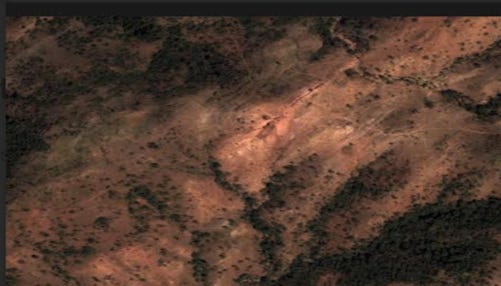
Satellite image of land under gold mining in Tigray
This week, The Globe and Mail, one of Canada’s business-friendly newspapers, published an in-depth investigation entitled “How Gold Tarnished Tigray”, authored by Claire Wilmot and Ashenafi Endale. The piece stands out as the most detailed examination to date of Tigray’s booming but unregulated gold sector, drawing from both local reporting on the ground and international analysis. Getachew Reda praised the article and recommended it to all readers.
The focus of the investigation was the Da Tambuk and Mato Bula mines near Shire, operated by the Canadian-listed East Africa Metals (EAM). The reporters spent weeks in the region, conducting interviews with a wide range of sources: local miners, community members, military and government personnel, international experts, and industry insiders. They also analyzed hundreds of pages of leaked documents, public records, financial statements, and satellite imagery to map illegal mining activity across the region.
According to their findings, between January 2024 and June 2025, gold extraction in Tigray became a highly lawless enterprise, involving former soldiers collaborating with Chinese mining operators whose equipment was funded by undisclosed foreign investors. These mining areas were heavily guarded by military forces who oversaw extensive smuggling operations, driving further instability and violence. While EAM maintains its operations are lawful, the investigation portrays the company as a central figure in a larger, shadowy network linking foreign investors, Chinese partners, and local military actors.
The report also exposes the environmental consequences of these operations. Toxic chemicals used to extract gold are contaminating soil and water, causing illness among local residents and destroying crops and livestock. Along the main highway connecting Mekelle and Shire, children have been observed carrying small amounts of gold dust or nuggets, underscoring how deeply the mineral trade has infiltrated daily life.
Tigray’s political environment has created a vacuum that allows these activities to flourish unchecked. Even though General Tadesse was expected to curb illegal extraction and reduce environmental harm, the Globe’s findings indicate that oversight remains minimal. Military commanders control access to the most lucrative sites, foreign investors exploit the situation to expand operations, and the resulting wealth has shifted local power dynamics. The report describes the situation as a “Wild West,” where laws are largely ignored, journalists face harassment, whistle-blowers are threatened, and civilians protesting land seizures are often attacked or killed.
Ultimately, the investigation presents Tigray as a region where formal and illicit mining industries exist side by side, with conflict, foreign capital, and opportunistic actors shaping a dangerous gold rush. What began as small-scale, artisanal mining has grown into mechanized, large-scale operations, threatening both the environment and the region’s fragile social and political structures. The gold extraction in Tigray represents a multi-billion-dollar resource base, and the soaring prices of gold on the global market have made it even more desirable, further intensifying the risks associated with it.
2. Farewell to a Legend: Bereket Mengisteab
We are losing people of talent and art every year. Bereket Mengisteab was a towering figure — a legend — in Tigrigna music. Hardly any one of my generation passed their childhood without listening to and enjoying Bereket’s songs. Arguably, he was the father of modern Tigrigna music.
Not only was he a great singer, but also a prolific one. I’ve heard he composed and sang around 300 songs. At least in album form, someone on Facebook listed 18 albums under his name — an incredible legacy.
For comparison’s sake, I would say Bereket stands on the same level in Tigrigna music as Tilahun Gessesse does in Amharic, and Ali Birra in Oromifaa. If we were to name the best alongside or just behind him in Tigrigna, the list would include Yemane Gebremichael (Barya), Tsehaitu Beraki, Kiros Alemayehu, and Eyasu Berhe — that’s my personal assessment.
Bereket spent part of his youth in Addis Ababa and even owned a music shop during the imperial era in the city. Around the time of the Derg’s rise, he left for the Eritrean Liberation Front (ELF) and joined the armed struggle — I’m not sure for how long. We know that he lived abroad for some time before returning after Eritrea’s liberation. Even then, he lived partly in Addis Ababa, where he was as beloved as he was in Asmara. The affection and acclaim he enjoyed in both cities must have made it easy for him to divide his time between them.
Beyond the melody and beauty of his music, his lyrics also had a unifying power. In some songs, he exalted both Tigryan and Eritrean provinces with equal warmth. One of his most beloved songs went:
“ተመን የያ ነይረ ተመን የያ ትግራይ ዓደይ ኣማዕደየ ርእየያ,”
which resonated deeply in Tigray. In January 1998, he was in Adigrat around Ethiopian Christmas, entertaining residents with that song and others.
But with the eruption of the Ethio-Eritrean war, Bereket’s music took a partisan turn — he sang wholly to spur the Eritrean army and asserted that Badme was Eritrean. In that sense, he went with the flow of the time in Eritrea, no different than any other EPLF colonel or general.
Regardless, Bereket Mengisteab was a great artist — a rare musical genius who inspired generations and gave voice to a people’s emotions, struggles, and aspirations. My only reflection, perhaps as a caveat, is that with his God-given talent, he could have served as a greater unifying force for the peoples on both sides.
May he rest in peace — a legend whose voice will long echo in the hearts of all who speak and feel in Tigrigna.
3. Genocide Watch Issues a Landmark Statement on Eritrea’s Role in the Tigray Genocide

This week, a not-for-profit global organisation known as Genocide Watch — coordinator of the Alliance Against Genocide, a coalition of more than 65 organisations working on genocide, crimes against humanity, and war crimes — issued a profoundly important statement.
Genocide Watch’s mandate spans awareness creation, early warning, prevention, and accountability in relation to genocide and mass atrocities. It is a highly visible, long-standing, and influential body. It is also the author of the widely used “Ten Stages of Genocide”, a conceptual tool for analysing conditions that lead to genocide and situating them along a scale of inevitability and severity.
In its November 2025 release, Genocide Watch unequivocally declared that Eritrea committed genocide in Tigray from 2020 to 2022. The statement leaves no ambiguity. One of its core assertions reads:
“…Alongside atrocities committed against its own people, Eritrea was heavily involved in the Tigrayan genocide in Ethiopia that left an estimated 600k people dead.”
The statement further underscores that Eritrea’s military continues to commit crimes against humanity in Tigray, asserting that systemic rape, sexual violence, civilian massacres, and arbitrary detention persist to this day. It also notes Eritrea’s sustained military presence inside Tigray.
Genocide Watch calls for the withdrawal of Eritrean forces from Tigray and urges Eritrea not to work against the 2022 Pretoria Peace Agreement. More significantly, it calls on the United States and UN member states to bring a genocide case before the International Court of Justice, urging a joint prosecution of Ethiopia and Eritrea for genocide against the Tigrayan people and for a full investigation into broader human-rights violations inside Eritrea.
This is another damning indictment of Eritrea, its government, and Isaias Afwerki for their role in planning and perpetrating genocide in Tigray. The report does not spare the Ethiopian government either; its co-design and co-perpetration are clearly acknowledged. However, as this particular release focuses on Eritrea’s internal and external conduct, the spotlight is trained on Asmara.
Such reports must be seized upon by the Tigrayan government, scholars, activists, and advocates to escalate the push for accountability and to restore the dignity of the Tigrayan people. Sadly, we do not have such a government. What we have is a government of midgets — incapable of rising to the historical moment or defending the rights of its own people.
4. Adonay, Seifu, and the Hyped Battle. “Does something seem terribly off here?”
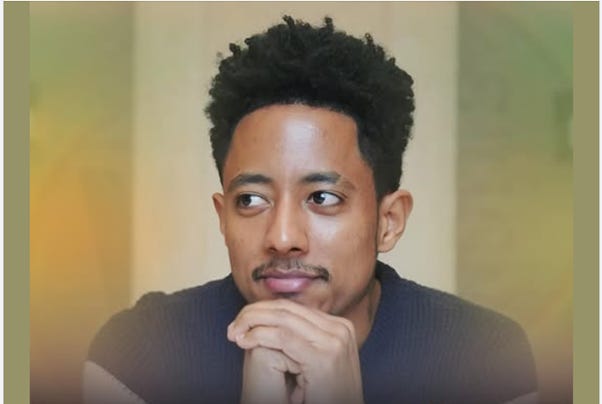

I’m not a TikTok person. To be honest, I don’t even understand it. But the buzz around Adonay and this competition for Best Influencer or Top Tiktoker was impossible to ignore. You’d be drawn in almost unwillingly, asking yourself what on earth it was all about.
Soon, I learned that a young man named Adonay Berhane had taken TikTok by storm in Ethiopia, amassing millions of followers. What did he do to attract so much attention? Apparently, he shared short reels about life lessons, hobbies, daily routines—sometimes even seemingly silly things that, yet, people found entertaining. So be it. That’s the new era we live in—where fame can come from a few spontaneous clips, a touch of charm, or a streak of authenticity.
Then came the real drama: the standoff between Show King Seifu Fantahun and Adonay. They’re from different generations and backgrounds, but happened to cross paths in the year’s fiercely contested TikTok awards. Seifu hosted the other well-known content creator, Yuti Nas, on his show, which instantly boosted her popularity, and she almost closed the gap between her and Adonay. This angered Adonay’s supporters, who called the move unfair—and many even accused Seifu of acting out of bias, even bigotry (racism), given that Adonay and Yuti Nas come from different ethnic backgrounds.
To cut a long story short, Seifu later invited Adonay too and dismissed the accusations of prejudice with sarcasm. Adonay, however, responded calmly: “I’m fine as I am. I don’t need your support, and I’m not interested in campaigning for the title.” His main point was that Seifu had ignored and disrespected him earlier when he’d sought a chance to appear on the show, and that he wasn’t willing to accept the invitation now.
What interests me most, though, is the bigger picture—the politics beneath it all. The clash between Seifu and Adonay’s followers feels like a microcosm of the divisions running through our society.
I can’t claim to know Seifu well; I’m not a regular viewer of his program. He may have his biases—many socialites and celebrities in Ethiopia have it—but I’ve also seen him host artists and activists from Tigray, so it’s a bit hard for me to label him easily. What struck me most was that Adonay himself never accused Seifu of bigotry, even though many of his supporters did. In my view, perhaps Adonay’s followers are reading too much into a moment, interpreting it through the lens of our polarized climate.
Sometimes, we’re too quick to fit every disagreement or slight into the grand narrative of ethnic or political fault lines. It doesn’t help. Not everything needs to carry a larger meaning; some things are simply what they are.
Well, aside from the above, a bit of advice here. With his rising fame and the challenges ahead, naturally, stemming from being famous, Adonay MUST have a manager to guide him in the complex maze of a celebrity’s life.
5. Abreha’s Story — A Heart-Breaking Journey from May-Kadra Lit by Human Kindness

Ethio-Forum’s feature about a Tigrayan father named Abreha Kinfe and his four children from Mai-Kadra is as heart-breaking as it is hope-restoring. It represents thousands of untold stories of atrocity, human struggle, quiet stoicism, and the extraordinary kindness of strangers.
The account confirms the massacre in Mai-Kadra, but it also begins with a specific tragedy: Abraha’s wife died immediately after giving birth to twins—only a few weeks old at the time— for being denied medical care. Suddenly widowed and responsible for four children, two of them newborns, he faced both danger and despair. Encouraged by fellow Tigrayans who had already reached the Sudan, he began walking toward the border, carrying the twins and guiding his two older sons.
Earlier, he sheltered the children under a makeshift hut—much like the one where the twins were born—and survived the first forty days with the help of neighbours. When it became clear that staying was impossible, he set off again on foot, travelling for days.
Then came a striking twist: Ethiopian soldiers encountered Abreha on the way. They were moved by his condition and quietly showed him how to traverse the terrain safely to reach Sudan. They even warned him to avoid Eritrean soldiers, whom they believed would endanger his life. That small act of humanity became a lifeline.
Once he crossed into Sudan, the journey took yet another turn. A compassionate person called Dr. Tewodros Tefera, a non-Tigrayan Ethiopian doctor, stepped in and helped him tirelessly. Nariman El-Mofty, an Associated Press correspondent, publicised the story worldwide. And a Canadian Ethiopian woman, whose name has been changed to Mary for privacy, took on the demanding work of arranging the family’s relocation. After fleeing again to Egypt to escape the war that broke out in Sudan, Abreha and his children finally reached Canada, the “promised land,” where a new beginning awaited.
The moral of the story: under every crushing human circumstance, there are people—irrespective of race, religion, or background—who feel another’s pain as their own, extend their hands, and give from the depth of their humanity. Kudos to all who lifted this man out of despair and helped secure a bright future for his children.
Behind so many wrenching stories lie countless untold stories of quiet courage and goodness.
Very interesting , topics and touching