
🔖𝙏𝒊𝙜𝒓𝙖𝒊 𝑾𝙚𝒆𝙠𝒍𝙮 𝘿𝒊𝙜𝒆𝙨𝒕 𝓔𝒏𝓭𝒊𝒏𝓰 March 26, 𝟐𝟎𝟐6

𝐴 𝑏𝑙𝑜𝑔 𝑤𝑜𝑣𝑒𝑛 𝑤𝑖𝑡ℎ ℎ𝑢𝑚𝑎𝑛-𝑐𝑒𝑛𝑡𝑒𝑟𝑒𝑑 𝑠𝑡𝑜𝑟𝑖𝑒𝑠 𝑜𝑏𝑗𝑒𝑐𝑡𝑖𝑣𝑒 𝑖𝑛𝑠𝑖𝑔ℎ𝑡𝑠, 𝑎𝑛𝑑 𝑜𝑟𝑖𝑔𝑖𝑛𝑎𝑙 𝑝𝑒𝑟𝑠𝑝𝑒𝑐𝑡𝑖𝑣𝑒𝑠 —𝑧𝑜𝑜𝑚𝑖𝑛𝑔 𝑖𝑛 𝑜𝑛 𝐓𝐢𝐠𝐫𝐚𝐢 𝑤𝑖𝑡ℎ𝑖𝑛 𝑡ℎ𝑒 𝑤𝑖𝑑𝑒𝑟 𝐄𝐭𝐡𝐢𝐨𝐩𝐢𝐚𝐧 𝑐𝑎𝑛𝑣𝑎𝑠.
Dear Subscribers and Friends,
I have selected four issues and developments from my current edition (my 50th). The focus is on Tigray and its situation: the strangling of Tigray through fuel starvation, the visit of General Tadese to Alemata town, the neglect of the displaced, and the release of Shewit Wudase, the intellectual-cum-politician.
I hope you will enjoy my pieces, and please also send your feedback.
Strangling Tigray: Fuel Starvation as a Weapon
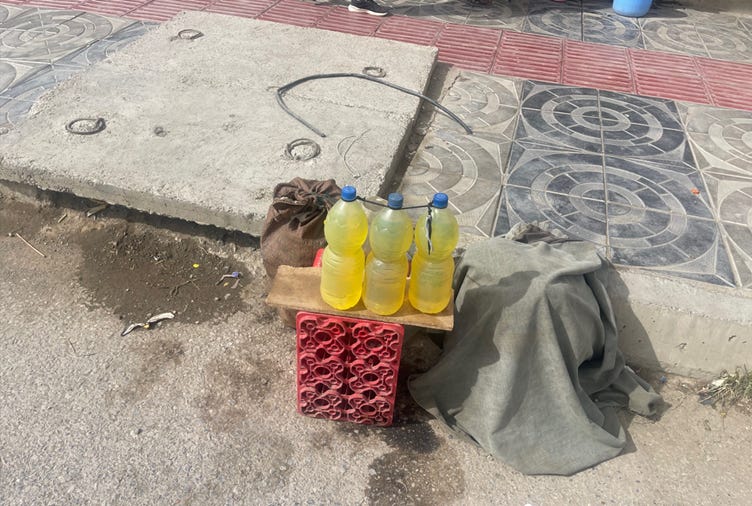
Fuel in Tigray is not merely scarce—it is virtually nonexistent. The situation defies ordinary description; it lies beyond the reach of simple language. Many can no longer recall the last time a fuel tanker entered the region.
As we speak, a litre of petrol is selling for around Birr 500—up by 100 Birr from just last week—roughly four times the pump price in Addis Ababa. A litre of naphtha goes for about Birr 450. In response, some have turned to electric vehicles, but what fraction of the population can realistically rely on them?
For most people, movement depends on taxis. A one-way trip to Adigrat, some 125 kilometres away, now costs about Birr 1,000. Even short journeys within Mekelle accumulate into a heavy daily burden.
The consequences extend well beyond transport. Economic activity itself is being stifled. Road construction projects in the city have reportedly stalled due to a lack of naphtha for heavy-duty machinery. Factories reliant on diesel are similarly constrained, their operations curtailed by fuel shortages.
This appears to form part of a quiet yet sinister pressure—one that risks pushing Tigray toward deeper disarray and potential collapse. And this is only one dimension of the crisis. Banks remain largely non-functional, unable to dispense cash, forcing people to rely almost entirely on electronic transfers—even for the smallest transactions, from a cup of coffee to a taxi fare.
It is difficult to comprehend why such punitive conditions are being imposed on ordinary people. Petrol is now routinely purchased on the black market, often from roadside vendors selling from plastic containers, with no assurance of quality. I have seen this firsthand. The financial strain alone is debilitating; the broader human toll is even more distressing.
A Quiet Return to Alamata: First Steps on Uneasy Ground
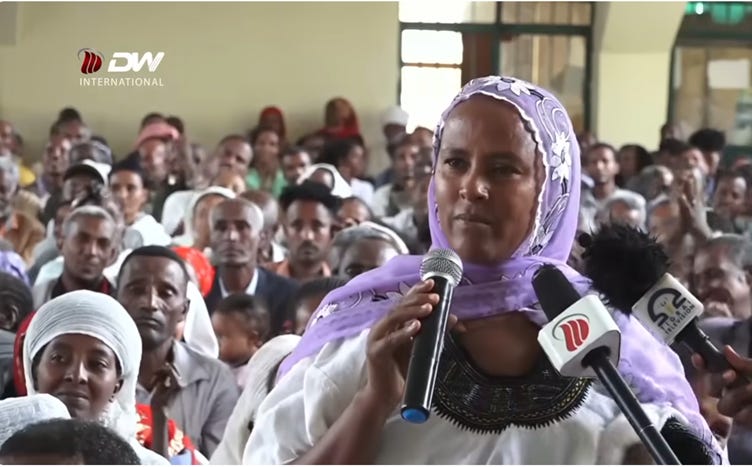
General Tadesse Worede, accompanied by his regional entourage, has for the first time visited Alamata and Waja, engaging directly with a large gathering of residents in what, in TPLF parlance, is known as a “People’s Conference.” It was a low-key affair, notably devoid of excessive fanfare—perhaps fitting for a moment when so much has, for too long, been overstated and overplayed.
This marks the first visit in nearly four years by Tigray’s leadership to one of its most vital regions—Alamata in Raya, a hub of agricultural production, particularly known for its fruit cultivation. For several years, the area has served as a contested ground, a staging post for rivalry among Amhara Fano forces, the Amhara Special Forces, the Federal Army, and the Tigray regional forces. Most significantly, it has been administered under a Command Post system reminiscent of those imposed in the Amhara Regional State.
I watched the YouTube footage of the Alamata residents in discussion with General Tadesse. There is little, if any, distinction between the sentiments expressed there and those heard in places like Sheraro, at the opposite end of Tigray. The participants spoke with intensity—unmistakably Tigrayan in their conviction—their emotions surging as they addressed issues of genocide, occupation, and the dismantling of infrastructure by the federal government and allied militias.
Yet, neither General Tadesse nor the participants displayed exuberance. Instead, there was a shared restraint—an undercurrent of apprehension, even foreboding. The fear persists that another round of occupation could unfold at any time, particularly given the proximity of a command post reportedly stationed in Kobo, Northern Wollo, barely 25 kilometers south of Waja, Tigray’s southernmost town.
General Tadesse has done well to make these initial, quiet yet meaningful inroads into Alamata and its surroundings. But such engagement must not be episodic. It requires continuity—whether by him or his successor—to ensure that the people feel consistently connected, acknowledged, and embraced.
One notable aspect of the meeting was the absence of the much-criticized TPLF stalwarts—figures such as Debretsion and Fetlework. Alem Gebrewahid was present and even received a token acknowledgment from the city of Alamata, which he met with a measured and pleasant smile. Interestingly, Alem appears to be undergoing a form of political rehabilitation, no longer cast in the same adversarial light as the duo mentioned above.
You Cannot Jail an Idea: The Case of Shewit Wudasse.”
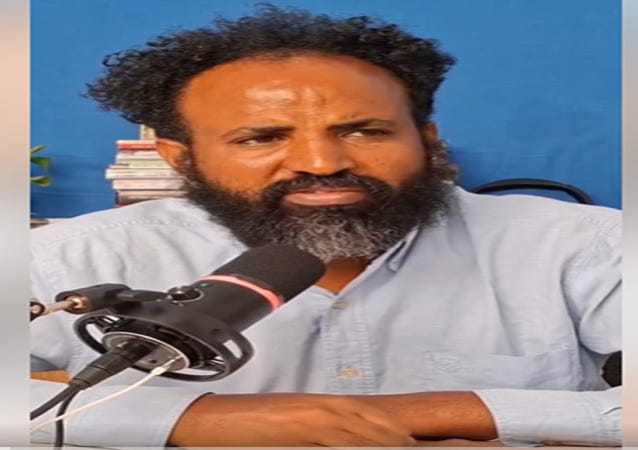
Shewit Wudasse has finally been released after a week in detention. I wrote about him in last week’s blog, and it is only fitting to now reflect on his release—what led to his imprisonment, and what made his release possible.
He is out on bail. And the charges? I mentioned them last week with some hesitation, but Shewit himself has now confirmed them: he is accused of having carried weapons—rifles and explosives—some months ago. A university lecturer, a public intellectual, allegedly transporting and distributing instruments of destruction from his own car? The claim is not only implausible; it borders on the absurd.
Detention, in such circumstances, raises more questions than it answers. It also reveals a deeper miscalculation. Incarcerating politically engaged individuals does not silence them; it hardens resolve. It transforms dissent into defiance, and opposition into something far more entrenched.
General Tadesse, it is unwise to rely on the machinery of repression to contain ideas and civic engagement. It diminishes your standing and weakens your moral ground. One cannot credibly challenge Prime Minister Abiy Ahmed—or any authority—for imprisoning Tegaru, while replicating similar practices at home.
The standard must be higher. The moment demands it.
“Forgotten in Plain Sight: The Displaced of Tigray”
The displaced, scattered across makeshift tents throughout Tigray, remain as hopeless as ever—clinging to whatever little they can eat and the few pieces of clothing they can wrap around their bodies. They are tragically underclothed, underfed, and see no light at the end of the tunnel.
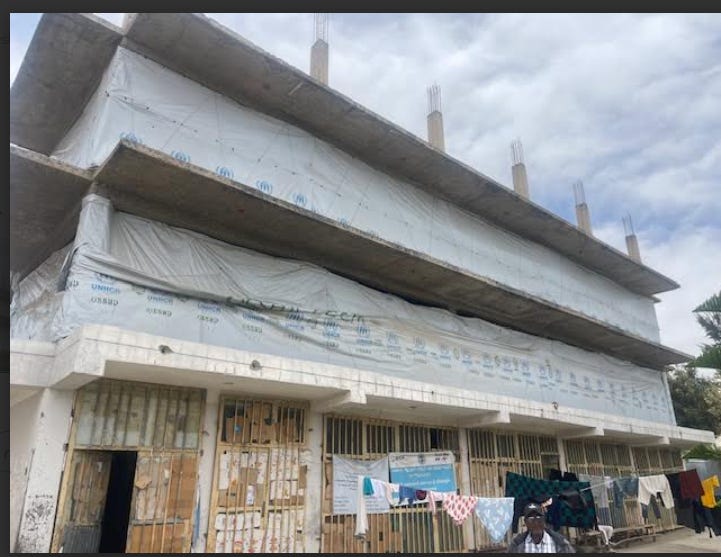
Nearly five years ago, my family—my siblings and I in particular—decided to accommodate over one hundred displaced families in unfinished buildings we own around Enda Selassie in Mekelle. These structures are barely habitable: only the ground floor has doors and windows, while the upper floors remain exposed, incomplete, and vulnerable to the elements. The families came from Erob Woreda and Western Tigray. Yet, even so, this remains one of the better accommodations in town for displaced families.
Yesterday, I visited them.
Those I met from Erob told me that their homes are still occupied by Eritrean forces. The indigenous inhabitants—the Erobites of Aletena, Aiga, and Dalgeda—continue to face harassment, including pressure to assume an Eritrean identity.
Over the years that they have stayed in our building, life has gone on in ways that are both tragic and, at times, quietly hopeful: some have passed away, new children have been born, the sick have struggled on, and the elderly have grown increasingly frail. NGOs provided support for a while, but even that lifeline is now fraying. Resources are dwindling, and survival has become ever more precarious.
What struck me most—and what truly disheartened me—was this: they have never been visited by senior officials. Not once. No one has come to listen, offer solace, or extend even a gesture of empathy. At one point, Professor Kindeya Gebre Hiwot visited on our invitation, and we are grateful to him for that. But that was the exception. Yes, local kebele or sub-city staff occasionally pass by—but these visits are incidental, not intentional. They come as part of routine duties, not as a deliberate effort to engage with the displaced.
From higher authorities—those who carry influence, responsibility, and voice—there has been nothing. No scheduled visits. No surprise visits. No acknowledgment of their situation.